TPO Installation in Garfield Park: The Short Version
- Typical installed cost: $7 to $14 per square foot
- Typical project length: 4 to 14 days for most commercial buildings
- Expected service life: 20 to 30 years with proper install and maintenance
- Membrane thickness options: 45, 60, 80 mil
- Attachment methods: mechanically fastened, fully adhered, induction welded
The 7 step Install Process
- Inspection and measurement. We walk the roof, check decking, photograph penetrations, and measure square footage. Free for Garfield Park property owners.
- Tear off or recover decision. Codes in Garfield Park typically allow one recover layer. If you already have two, full tear off is required.
- Deck repair. Rotted wood, rusted metal, or wet insulation gets cut out and replaced before anything new goes down.
- Insulation layout. Polyiso boards are staggered, taped, and fastened to hit your target R-value.
- Cover board install. A half inch dense board adds puncture resistance and a clean welding surface.
- Membrane attachment. Sheets get rolled out, fastened or adhered, then hot air welded at the seams.
- Detail work and walkthrough. Curbs, drains, pipes, and edge metal get flashed. We walk it with you before final invoice.
Common Questions From Garfield Park Owners
- Can you install in winter? Adhered systems have temperature minimums, but mechanically fastened TPO can go down in cold weather with the right primers.
- Will my building stay open? In most cases, yes. We sequence work over occupied areas to keep noise and dust manageable.
- What about active leaks before install? Severity is assessed over the phone, then we prioritize tarping and dry in so the interior is protected until the project starts.
- Do you pull the permit? Garfield Park Commercial Roofing handles permitting with the Garfield Park building department on every commercial install.
- Can I finance the project? Commercial roofing financing is available through several lenders we work with regularly.
Maintenance That Protects Your Warranty
- Twice yearly inspections, spring and fall
- Drain and scupper cleaning
- Seam check after major hail or wind events
- Document any rooftop work by HVAC or other trades
- Keep the warranty paperwork accessible
- Trim back overhanging branches that could scuff the membrane
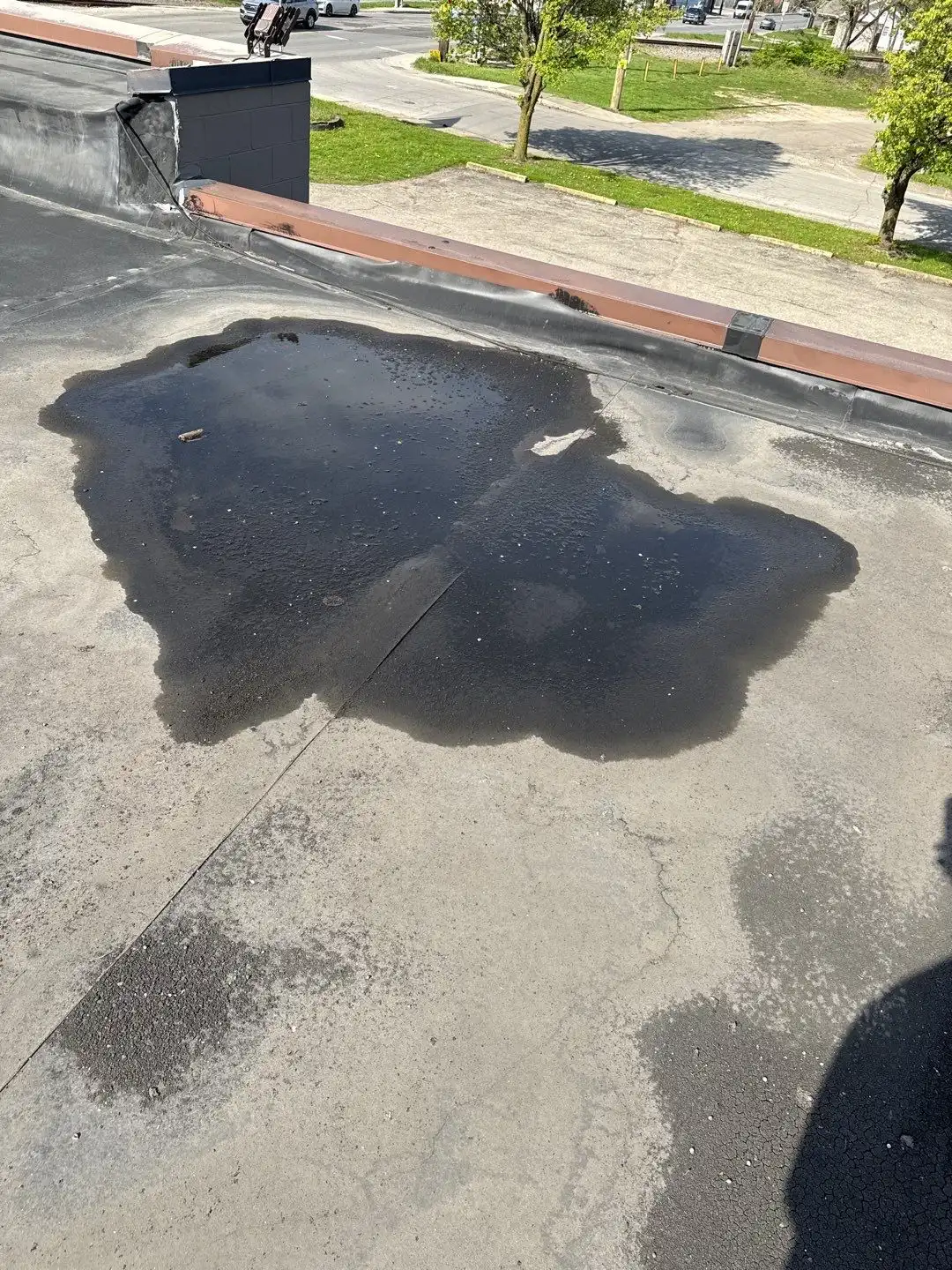
- Address ponding water spots before they turn into seam failures
Attachment Methods Compared
- Mechanically fastened: fastest, cheapest, screws into deck through plates. Visible flutter in high wind.
- Fully adhered: glued down, smooth appearance, better wind uplift performance, costs 15 to 25 percent more.
- Induction welded (RhinoBond style): plates magnetically welded to membrane, no penetrations through the sheet, premium pricing.
How Garfield Park Commercial Roofing Picks the Right Method
- Roof height under 30 feet: mechanically fastened usually checks every box
- Roof over 30 feet or in open exposure: fully adhered or induction welded for wind uplift
- Lightweight deck (gypsum, cementitious wood fiber): adhered systems often required
- Occupied space below with noise concerns: adhered eliminates fastener pop
- Re cover over existing membrane: induction welded keeps the old layer intact
Warranty Tiers, Plain English
- Material only (10 to 15 years): covers the membrane sheet, not labor or accessories
- System warranty (15 to 20 years): covers membrane, insulation, fasteners, and adhesives if installed by a certified contractor
- Total system / NDL (20 to 30 years): no dollar limit on covered repairs, requires manufacturer inspection during install
- Wind riders: upgrade coverage to 90 or 120 mph zones, useful for taller Garfield Park buildings
- Hail riders: add on coverage for impact damage, priced by membrane mil and region
Membrane Thickness: Pick the Right One
- 45 mil: entry level, shorter warranty, fine for low traffic roofs on a tight budget
- 60 mil: most common spec in Garfield Park, balances cost and durability
- 80 mil: best puncture resistance, used on roofs with foot traffic, hail risk, or rooftop equipment
If hail is a real concern for your building, see how a thicker membrane interacts with leak risk in our notes on roof leak origin detection vs repair.
What to Expect on Install Days
- Morning setup: dumpster placed, ground protection laid, safety perimeter established
- Crew size: 4 to 8 installers on typical Garfield Park commercial jobs
- Noise level: fastener drilling is the loudest phase, usually mid morning to mid afternoon
- Tenant access: entrances stay open, but parking near the building may shift
- HVAC coordination: rooftop units are lifted or worked around with the property manager looped in
- End of day shutdown: open seams are temporarily sealed before crews leave
Red Flags in TPO Bids
- No mention of cover board over insulation
- Vague membrane thickness (just "TPO" with no mil spec)
- Recover quoted when you already have two roof layers
- No edge metal line item
- Warranty under 15 years on a new install
- No deck inspection before pricing
- Payment terms requiring more than 30 percent up front
- No manufacturer name attached to the membrane
- Missing proof of certification with the membrane brand
Timeline by Building Size
- Under 5,000 sq ft: 3 to 5 working days
- 5,000 to 15,000 sq ft: 5 to 9 working days
- 15,000 to 50,000 sq ft: 8 to 14 working days
- 50,000+ sq ft: phased schedule, often 3 to 6 weeks
Rain delays are part of Garfield Park weather. We schedule with buffer days and tarp open areas if a storm rolls in mid job.
What We Include on Every Garfield Park TPO Install
- Free inspection and written estimate
- Photo documentation of deck condition
- Manufacturer spec fasteners and adhesives
- Hot air welded seams (no tape, no cold adhesive on seams)
- Flashing on every penetration
- Daily cleanup and magnetic sweep for fasteners
- Final walkthrough with owner or property manager
- Registered warranty paperwork sent within two weeks of completion
For owners weighing whether to install new versus restore existing, our breakdown on when to coat vs replace your commercial roof walks through the math. If you are comparing membranes, the comparison in TPO vs EPDM vs PVC covers where each one wins.
What Drives Your Cost
- Square footage: bigger roofs lower the per square foot price
- Tear off vs recover: tear off adds $1.50 to $3.50 per square foot
- Insulation R-value: R-25 to R-30 is the common target in Garfield Park
- Membrane thickness: 60 mil is the sweet spot for most projects
- Penetrations: every pipe, curb, and skylight adds flashing labor
- Edge metal: coping, drip edge, and gutters add $8 to $20 per linear foot
- Access: crane rental or stair carries push labor up
- Warranty tier: 20 year manufacturer warranties run more than 15 year
- Disposal fees: tear off dumpster costs vary with landfill distance from Garfield Park
- Code upgrades: energy code updates can require more insulation than your old roof had
TPO Installed Cost by Building Type (per sq ft)
Ranges reflect typical Central Indiana conditions, including tear off and standard insulation packages.