Myth: The Leak Is Always Directly Above the Stain
This is the single most expensive misconception in flat roof repair. The reality is that water entering a low slope assembly travels horizontally along the deck, between insulation boards, and through fastener holes before it finds a path down through the ceiling. A stain in the northeast corner of an office can easily originate from a failed pitch pan twenty feet south, near a rooftop unit. Without proper origin tracing, sealing the spot above the stain just moves the water somewhere else. Our crews use infrared scanning and water testing to find the actual entry point, which is covered in more depth in our guide to roof leak origin detection versus repair. We have seen cases in Garfield Park where a leak appeared in a conference room but originated at a parapet coping joint on the opposite side of the building, with water tracking along a steel beam before finding a fastener penetration to drip through. Chasing the stain in those situations wastes money and lets the real damage continue spreading through the insulation.
Myth: Ponding Water Is Normal and Harmless
You will hear this from owners who have lived with puddles on their roof for years without obvious problems. The reality is that standing water accelerates membrane breakdown, attracts debris that clogs drains further, magnifies UV damage through the lens effect, and adds significant dead load to the structure. Industry standards generally consider water remaining 48 hours after rainfall to be a defect. In Garfield Park, where freeze thaw cycles can turn that puddle into ice, the damage compounds fast. Ponding is a symptom of inadequate slope, crushed insulation, or blocked drainage, and it should be addressed, not ignored. A two inch deep pond covering a hundred square feet adds over a thousand pounds of dead load that the structure was not necessarily designed to carry indefinitely. Tapered insulation crickets, drain sumps, and secondary scuppers are the usual fixes, and they cost a fraction of what structural repair runs after a deck starts to sag.
Myth: Repair and Replacement Are an Either-Or Decision
Many owners think they must choose between patching a leak today and tearing off the entire roof. The reality is that there is a wide middle ground. Targeted repairs handle isolated problems. Section overlays restore large damaged areas without full removal. Roof coatings can extend service life on membranes that are aged but structurally sound. The right answer depends on the percentage of wet insulation, the age and condition of the membrane, and how long you plan to own the building. We walk through these trade offs in detail when scoping the work, and you can read more in our comparison of commercial roof restoration versus replacement.
Myth: Snow and Ice Will Always Damage a Flat Roof
Owners often assume Garfield Park winters guarantee roof failure. The reality is that a properly designed flat roof handles snow load without trouble, and ice forms because of drainage and detail problems, not because the roof is flat. Ice dams on low slope roofs usually start at scuppers, internal drains that freeze, or parapet walls where wind driven snow accumulates. Heat tape at drains and proper insulation under the membrane prevent most cold weather leaks. What does cause winter damage is foot traffic on a frozen membrane, which can crack TPO and PVC. If you must inspect after a storm, wait for a warmer day or call a crew familiar with cold weather protocols.
Myth: An Active Leak Has to Wait Until the Rain Stops
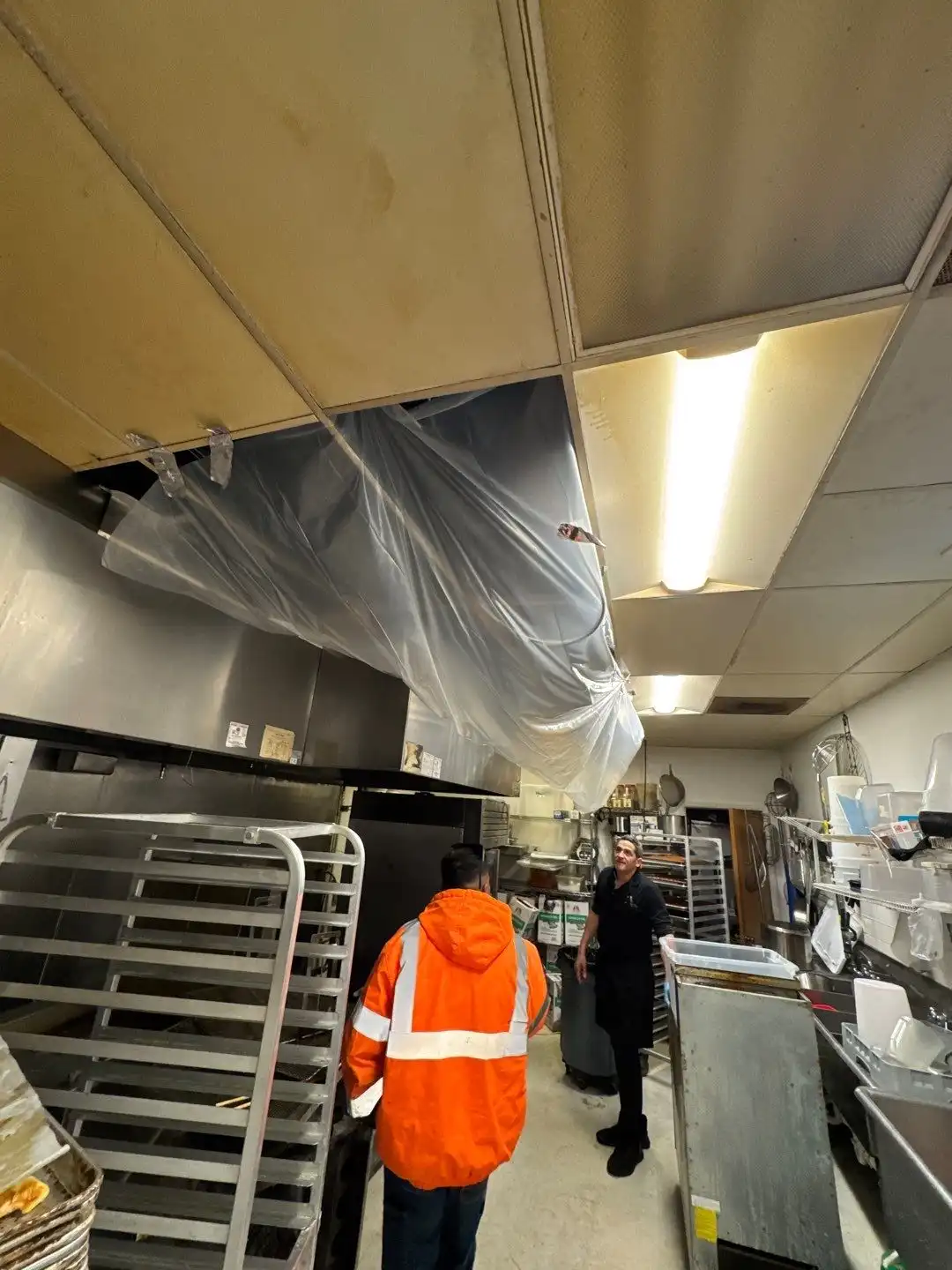
Owners often delay the call because they assume nothing can be done while water is still coming in. The reality is that Garfield Park Commercial Roofing prioritizes tarping and dry in for active leaks so the interior damage stops growing while we plan the permanent repair. Severity gets assessed over the phone, and the inspection is scheduled fast once conditions allow safe roof access. Temporary membrane patches, plug style drain covers, and interior containment buy time and protect inventory, ceiling tiles, and electrical systems. Waiting for a dry week to even start the conversation almost always makes the final repair more expensive, because saturated insulation has to be cut out and replaced once it has spread beyond the original leak zone.
Myth: If the Inside Looks Dry, the Roof Is Fine
Plenty of leaks never show up as ceiling stains until the insulation is fully saturated, which can take months or years. The reality is that wet insulation insulates poorly, drives up energy bills, corrodes metal decks, and creates the conditions for mold and structural rot long before drips appear inside. A moisture survey using infrared or capacitance meters can map wet areas without invasive testing. If your roof is over ten years old and has never had a survey, you may be carrying hidden damage that has nothing to do with what your ceiling shows. Our overview of attic water damage from roof leaks explains how this hidden moisture progresses on residential structures. Polyiso insulation in particular loses thermal value rapidly once saturated, and the moisture migrates outward over time, so a small wet area discovered this year can be three times larger by next summer if left alone.
Myth: A Bucket of Roof Cement Will Fix Any Leak
Black roof tar is cheap, available at any hardware store, and almost always the wrong answer on a modern flat roof. The reality is that asphalt based mastics are incompatible with TPO, PVC, and most single ply membranes. Slap a bucket of cement on a TPO seam and you have contaminated the area so badly that a proper heat welded repair becomes nearly impossible without cutting out a much larger section. We routinely see small leaks turn into thousand dollar repairs because someone tried to save money with the wrong sealant. The same goes for the silver fibered aluminum coatings sold as universal fixes. They bridge a crack temporarily, then peel as the membrane expands and contracts, leaving behind a residue that interferes with proper adhesion when Garfield Park Commercial Roofing crews arrive to do the job right.
Myth: Flat Roofs Only Last 10 Years
This was largely true forty years ago with built up asphalt systems that dried out and cracked. The reality is that modern single ply membranes, properly installed and maintained, regularly deliver 20 to 30 years of service. EPDM has a strong track record in the Garfield Park climate. TPO and PVC offer reflectivity that reduces cooling loads. The difference between a 12 year roof and a 25 year roof usually comes down to three things: correct installation details at flashings, semiannual inspections that catch problems early, and prompt repair of small issues before they spread.