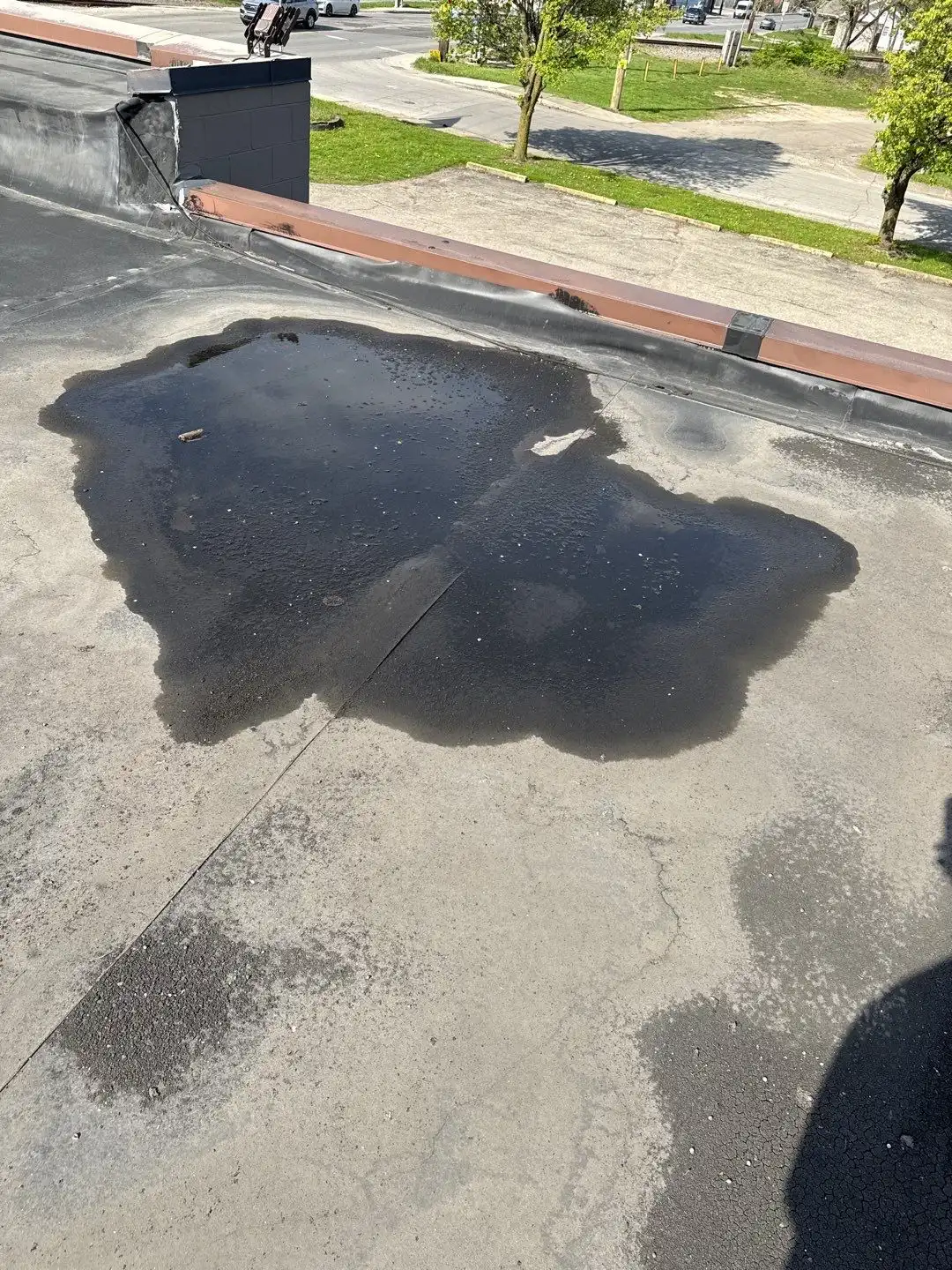
Step by-Step Commercial Roof Replacement Walkthrough
- Pre bid site assessment (Day 0). A field tech performs core cuts at three to six locations per 10,000 sq ft to confirm deck type, insulation thickness, and saturation. Moisture scans (infrared or capacitance) map wet areas. Expected output: deck composition report, R-value calculation, square footage to the nearest 100 sq ft.
- System selection. Choose membrane based on building use and budget. Target specs: TPO 60 mil minimum (80 mil preferred for high traffic roofs), EPDM 60 mil fully adhered, PVC 50 to 80 mil for kitchen exhaust exposure, modified bitumen two ply for ballasted retrofits. For guidance on chemistry trade offs, see our TPO vs EPDM vs PVC comparison.
- Insulation specification. Indiana energy code requires R-30 minimum on most commercial low slope assemblies. Standard build up: 2.6 inch polyiso base layer + 1.5 inch polyiso top layer, staggered seams, with a 1/2 inch HD cover board. Tapered systems add 1/8 inch per foot slope to drains.
- Tear off vs recover decision. Code permits one recover if the existing assembly is dry and structurally sound. Tear off is required when two roofs already exist, when more than 25 percent of insulation is wet, or when the deck shows corrosion. Tear off adds 15 to 25 percent to project cost but resets the warranty clock.
- Permit and submittal (Week 1 to 2). Submit stamped drawings, wind uplift calculations (FM 1-90 typical for Garfield Park), and manufacturer pre approval. Lead time: 10 to 14 business days for most Garfield Park jurisdictions. Garfield Park Commercial Roofing bundles the submittal package with the contract so permit review starts the same week the contract is signed.
- Material staging (Week 3 to 5). Membrane rolls, fasteners, adhesive, and insulation arrive on pallets. Crane lift to roof scheduled for one mobilization. Verify lot numbers match warranty paperwork. Confirm polyiso is stored on dunnage, covered, and rotated within 30 days of delivery to avoid R-value drift from moisture pickup.
- Tear off execution. Crews remove 2,000 to 5,000 sq ft per day depending on attachment method. Debris drops into dedicated chutes. Active leak zones get same day dry in with self adhered underlayment so interior operations continue.
- Deck inspection and repair. Replace any steel deck pan showing more than 10 percent section loss. Re fasten loose pans to 5/8 inch minimum embedment. Document all repairs photographically for the warranty file. Concrete decks get a primer if adhered systems are specified, and any spalling over 1/4 inch deep is patched with rapid set repair mortar before insulation lays down.
- Insulation install. Mechanically attached or adhered per wind zone. Fastener pattern for FM 1-90: typically 1 fastener per 2 sq ft field, 1 per 1 sq ft perimeter, 1 per 0.7 sq ft corner. Cover board fastened or adhered over polyiso.
- Membrane install. Roll out, weld or adhere, probe test every seam. TPO hot air welds target 5/8 to 1 inch weld width at 1,000 degrees F nozzle temperature. Daily tie ins use water cut offs at end of each shift.
- Flashings and penetrations. Every curb, drain, vent, and parapet gets prefabricated boots or field fabricated wraps. Sealant beads at termination bars use single component urethane, tooled smooth.
- Final inspection and warranty issue. Manufacturer rep walks roof, pulls core samples, verifies attachment. Warranty registration follows within 30 days. Standard term: 20 year NDL (no dollar limit) for fully adhered systems.
Cost Breakdown Per Square Foot
Installed Cost by System (per sq ft, Garfield Park)
Ranges reflect typical Garfield Park projects with tear off, R-30 insulation, and standard penetrations.
Line Items That Move the Total
- Tapered insulation package: adds $1.25 to $2.75 per sq ft over flat polyiso, depending on average thickness and crickets at curbs.
- Crane and lift logistics: $3,500 to $9,000 per mobilization in Garfield Park, driven by reach and street closure permits.
- Edge metal and coping: $18 to $36 per linear foot, fabricated to ANSI/SPRI ES-1 wind ratings.
- Roof drains and overflow scuppers: $650 to $1,400 per assembly, including sump pan and clamping ring.
- Walk pad and service paths: $4.50 to $7.00 per sq ft, recommended around any HVAC unit serviced more than twice per year.
- Lightning protection re bond: $2,800 to $6,500 per building if existing air terminals must be reset on the new membrane.
Timeline Phases (50,000 sq ft Reference Project)
- Estimating and contract: 5 to 10 business days.
- Permit and material lead time: 3 to 6 weeks.
- Mobilization and tear off: 5 to 10 working days.
- Insulation and membrane: 8 to 15 working days.
- Flashings and punch list: 3 to 5 working days.
- Warranty inspection and close out: 5 to 15 business days.
Total active construction averages 4 to 7 weeks weather permitting. Rain delays in Garfield Park typically add 3 to 8 working days across a summer install. If active leaks are occurring during the project, our crews coordinate with interior dry out (see our notes on attic water damage from roof leaks) so insulation and decking do not stay wet under the new assembly.
Weather and Sequencing Constraints
- Adhesive temperature floor: most bonding adhesives require 40 degrees F and rising. November and March installs may need solvent based adhesives or hot air weldable accessories.
- Dew point window: membrane adhesion fails within 5 degrees of dew point. Morning starts in humid Garfield Park weeks may push membrane work to 10 a.m.
- Wind cutoff: sustained winds over 25 mph stop membrane roll out. Crews pivot to flashing prefab or tear off zones with prior dry in.
- Tenant coordination: noisy fastener work is scheduled outside business hours when occupied office space sits below the deck.
Decision Criteria: Replace vs Restore
- Membrane age over 20 years with widespread alligatoring: replace.
- Wet insulation exceeding 25 percent of field area: replace.
- Three or more leak locations per 10,000 sq ft annually: replace.
- Single membrane defect with dry substrate: repair or coat. Review the coat vs replace decision guide before committing.
- Deck corrosion visible from underside, or fastener pull tests below 300 lbf average: replace, and re spec attachment to the new substrate condition.
- Pending tenant lease renewal over 10 years and existing warranty expired: replace to align asset life with lease term.
What Garfield Park Commercial Roofing Verifies Before Quoting Replacement
- Two independent core samples per 10,000 sq ft, photographed and logged.
- Infrared scan after a sunny day to confirm wet insulation boundaries.
- Drain count, sump condition, and overflow code compliance.
- Parapet height and edge metal wind rating against current ASCE 7 zone for Garfield Park.
- Existing warranty status, manufacturer, and any transferable coverage.